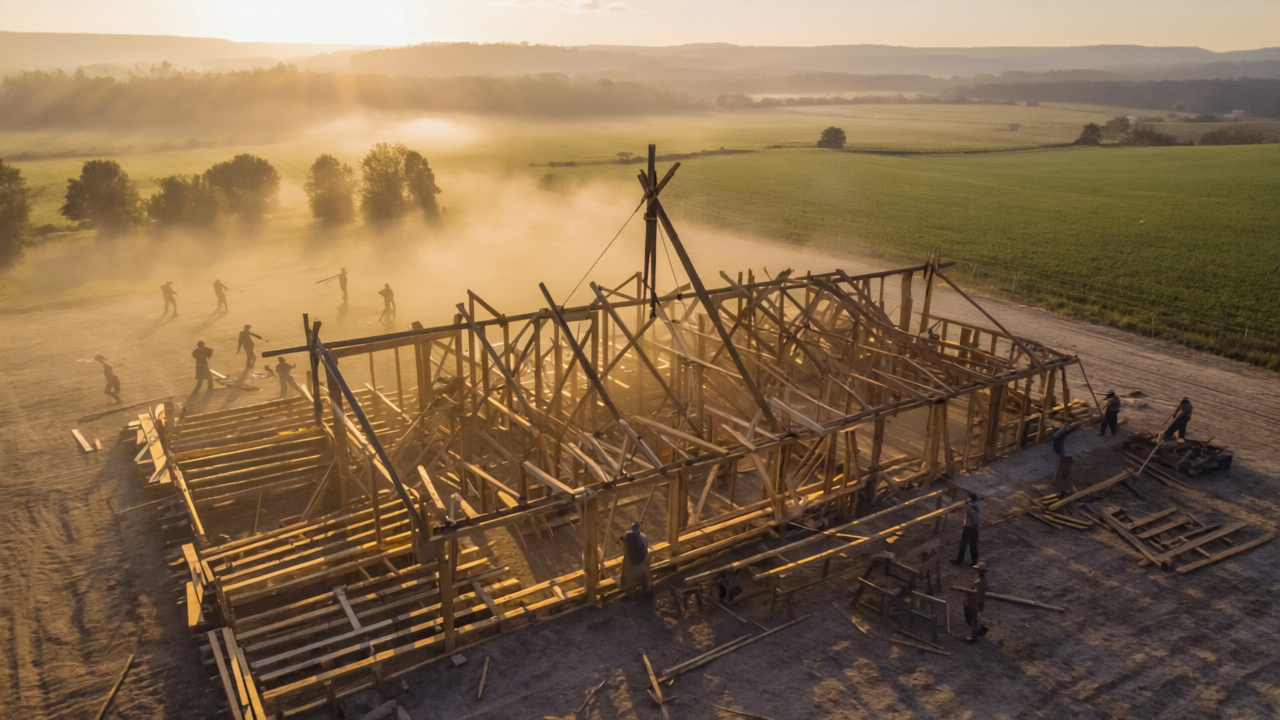
The mortise and tenon joint is a foundational technique in timber framing that creates a strong, interlocking connection between two pieces of wood, ensuring structures last for centuries.
In 1886, as outlined in The Inland Architect and Builder, craftsmen relied on hand tools to execute this method precisely. They'd start by marking a mortise—a rectangular slot—on one timber, typically one-third the depth of the piece, say 2 inches deep in a 6-inch beam. Using a sharp framing chisel and mallet, they'd chop out the mortise, working from both sides for accuracy and removing waste in 1/4-inch layers. For the tenon, they'd cut a protruding tongue on the mating piece with a backsaw, aiming for a snug fit that required no glue, just the wood's compression for stability. This approach, common in pre-1900 barns and homes, emphasized oak or pine timbers seasoned for at least six months to prevent warping.